Ask any operations head what keeps them up at night, and you’ll hear some version of the same answer: not knowing. Not knowing where stock is sitting, whether a supplier will deliver on time, or why the production floor stalled again on Tuesday.
That’s exactly the problem Microsoft Dynamics 365 Supply Chain Management was built to solve.
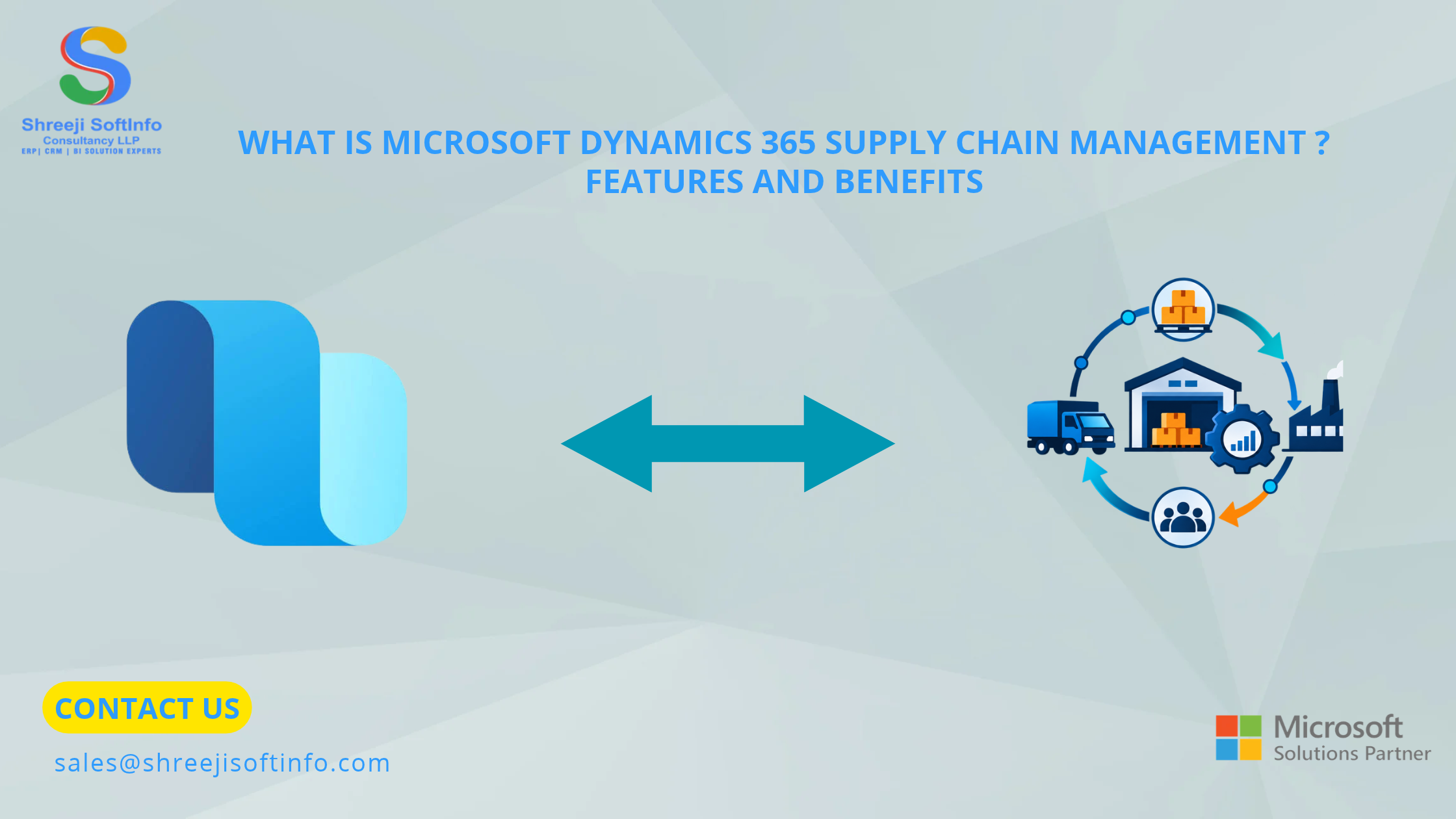
In short: Microsoft Dynamics 365 Supply Chain Management is a cloud-based ERP application from Microsoft that connects planning, procurement, manufacturing, inventory, warehousing, and transportation in one system. It gives businesses real-time visibility across their supply chain and uses AI to help them plan better and react faster to disruptions.
In this guide, the team breaks down what the platform actually does, the features that matter most, and the benefits we see businesses gain after going live.
What Is Microsoft Dynamics 365 Supply Chain Management?
Microsoft Dynamics 365 Supply Chain Management (often shortened to D365 SCM) is part of the Dynamics 365 family of business applications. It grew out of Microsoft Dynamics AX and now runs as a modern SaaS platform on Microsoft Azure.
Think of it as the operational backbone of a product-based business. It tracks a product’s whole journey, from the raw-material purchase order to the finished item leaving your warehouse.
What makes it different from older ERP systems is how connected it is. It shares data natively with Dynamics 365 Finance, Power BI, Microsoft Teams, and Copilot. So your planners, warehouse staff, and finance team all work from the same numbers.
It’s mostly used by mid-sized and large companies in manufacturing, distribution, retail, and other industries where inventory and logistics directly affect profit.
Key Features of Microsoft Dynamics 365 Supply Chain Management
The platform covers a lot of ground. These are the capabilities our clients tend to rely on most.
1. Demand Planning and Forecasting
D365 SCM uses historical sales data and AI-driven models to predict what customers will buy, and when. Recent updates add generative insights, so planners can analyze forecasts by product and location without building reports by hand. Better forecasts mean less overstock and fewer stockouts.
2. Manufacturing Management
Whether you run discrete, process, or lean manufacturing (or a mix), the system handles production orders, bills of materials, routing, and shop-floor control. Supervisors see live production status instead of waiting for end-of-shift updates.
3. Inventory Management and Visibility
The Inventory Visibility service shows real-time stock levels across warehouses, stores, and channels. That single view helps prevent overselling and makes it easy to move stock to where it’s actually needed.
4. Warehouse Management
Advanced warehouse tools support receiving, put-away, picking, packing, and shipping. A mobile app guides workers step by step, and the 2026 updates bring AI-assisted picking and hands-free scanning.
5. Procurement and Sourcing
You can manage vendors, purchase requisitions, approvals, and contracts in one place. The Copilot-powered Supplier Communications Agent can even draft and follow up on supplier emails about order confirmations and delays.
6. Transportation Management
Plan routes, compare carrier rates, book freight, and track shipments from within the system. This helps cut freight costs and keeps delivery promises realistic.
7. Asset Management
Track machines and equipment, schedule preventive maintenance, and log work orders. Fewer surprise breakdowns mean less unplanned downtime.
8. Built-In AI and Copilot
Copilot summarizes purchase orders, sales orders, vendors, and products in plain language. It also answers questions inside the app, so users spend less time hunting through screens.
Benefits of Microsoft Dynamics 365 Supply Chain Management
Features are great on paper. Here’s what they actually change for a business day to day.
- One version of the truth. Sales, purchasing, production, and finance stop arguing over whose spreadsheet is right, because everyone works from the same live data.
- Lower inventory costs. Accurate forecasts and real-time stock visibility help you carry less safety stock without risking stockouts.
- Faster, more reliable deliveries. Smarter warehouse workflows and transport planning mean orders ship on time, which customers notice.
- Quicker response to disruption. When a supplier slips or demand spikes, planners see it early and can re-plan in hours, not weeks.
- Less manual work. Copilot and automated workflows take over routine tasks like order summaries and supplier follow-ups.
- Room to grow. Because it runs in the cloud, you can add new warehouses, plants, companies, or countries without rebuilding your system.
- Fits your Microsoft ecosystem. If your teams already use Outlook, Teams, Excel, and Microsoft Power BI, adoption is noticeably smoother.
Who Should Use Dynamics 365 Supply Chain Management?
D365 SCM is a strong fit if your business:
- Manufactures or distributes physical products at scale
- Runs several warehouses, plants, or legal entities
- Has outgrown Tally, QuickBooks, or an older on-premise ERP
- Struggles with stock accuracy, late deliveries, or planning done in Excel
- Wants AI and analytics built into daily operations, not bolted on later
For smaller businesses with simpler needs, Dynamics 365 Business Central may be the better starting point. A good partner will tell you honestly which one suits you.
How Shreeji Softinfo Consultancy LLP Helps You Get It Right
Here’s something most software brochures won’t tell you: the success of any ERP depends far more on the implementation than on the software itself.
At Shreeji Softinfo Consultancy LLP, we help businesses plan, implement, and get real value from Microsoft Dynamics 365 Supply Chain Management. Our approach is practical and step by step:
- Discovery and process mapping. We study how your operations really run before touching any configuration.
- Solution design. We set up D365 SCM around your workflows, keeping customization to what truly adds value.
- Data migration. We move your item masters, vendors, customers, and open transactions from legacy systems cleanly.
- Integration. We connect SCM with Dynamics 365 Finance, Power BI, e-commerce platforms, and third-party tools.
- Training and go-live support. Your team learns the system on real scenarios, not generic demos.
- Ongoing support. After go-live, we stay on to fine-tune processes and roll out new Microsoft features as they release.
The goal is simple: a system your people actually use, and numbers your leadership can trust.
Frequently Asked Questions
What is Microsoft Dynamics 365 Supply Chain Management used for?
It’s used to manage and connect planning, procurement, manufacturing, inventory, warehousing, and transportation in one cloud-based system. This gives companies real-time visibility and control over their supply chain.
Is Dynamics 365 Supply Chain Management an ERP?
Yes. It’s the operations side of Microsoft’s enterprise ERP and is usually deployed together with Dynamics 365 Finance.
What is the difference between Dynamics 365 SCM and Business Central?
Business Central is designed for small and mid-sized businesses with simpler operations. Dynamics 365 Supply Chain Management is built for larger or more complex organizations with advanced manufacturing, warehousing, and multi-entity needs.
Does Dynamics 365 Supply Chain Management include AI?
Yes. It includes Copilot for summaries and in-app guidance, AI-driven demand planning, and agents such as the Supplier Communications Agent that automate routine supplier follow-ups.
How long does a D365 SCM implementation take?
Most implementations take roughly 6 to 12 months, depending on the number of sites, integrations, and how much data needs migrating. A phased rollout can deliver value sooner.
Who can help implement Microsoft Dynamics 365 Supply Chain Management?
An experienced Dynamics 365 consulting partner such as Shreeji Softinfo Consultancy LLP can handle planning, configuration, data migration, training, and post-go-live support.
Final Thoughts
Supply chains aren’t getting any simpler. Customers expect faster delivery, suppliers are less predictable, and margins leave little room for guesswork. Microsoft Dynamics 365 Supply Chain Management gives you the visibility, automation, and AI-backed planning to stay ahead of all three.
The software is only half the story, though. The right implementation partner makes the difference between a system that sits idle and one that pays for itself.
Thinking about Dynamics 365 Supply Chain Management for your business? Talk to the experts at Shreeji Softinfo Consultancy LLP. We’ll assess your current setup, map out a practical roadmap, and help you go live with confidence. Book a free consultation.